
Captain John E. Meredith, CBE, builder of the first private container terminal in Hong Kong and longtime head of Hutchison Port Holdings, joined Defense Industrial Base Institute (DIBI) and Global Resilience Institute (GRI) Founding Director Stephen E. Flynn to discuss containerization and supply chain security.
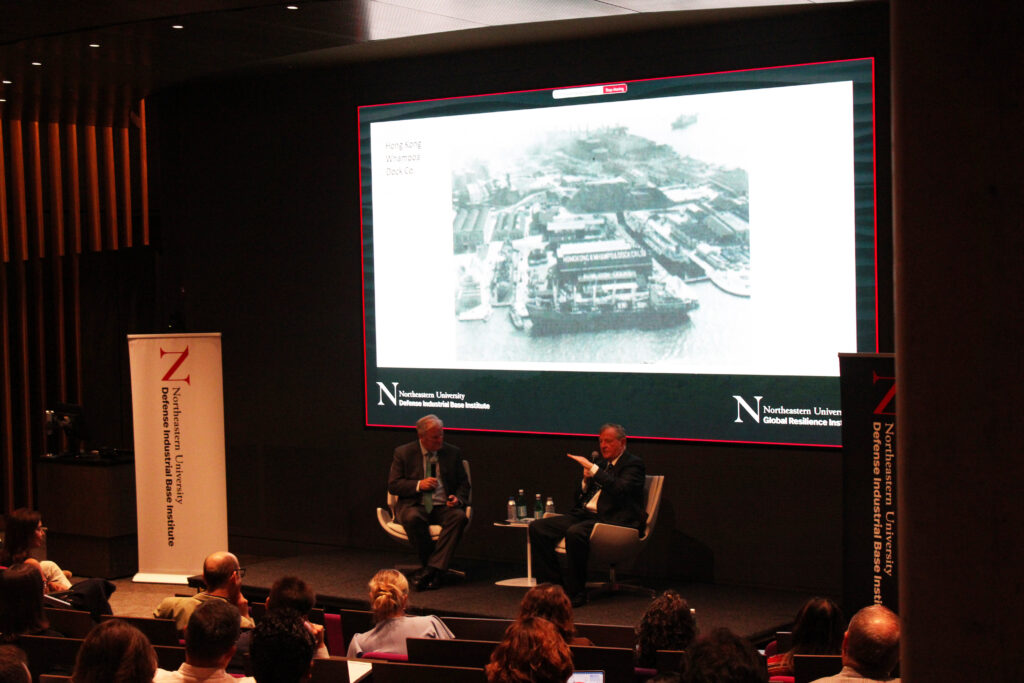
Before there were containers, moving cargo between land and sea was slow, labor-intensive work. Goods were unloaded at a seaport, reloaded into the hold of a ship, and the whole process was reversed on arrival, lifting it back out and onto a truck or train for the final destination.
How did containerization start? DIBI and GRI Founding Director, Stephen Flynn, traces this back to a dockyard in Hong Kong, where the first private container terminal was built by a shipyard that happened to have a spare crane and a bit of unused space. The man behind it, Flynn said, was sitting right there to tell the story himself: Captain John E. Meredith, CBE.
Captain Meredith is widely regarded as the driving force of container port development, building the first private container terminal in Hong Kong in 1972 and growing Hutchison Port Holdings into the world’s leading port operator, at one point moving nearly 25% of the world’s shipping containers. On July 16, he joined Flynn for a public event on how this system was built and what it takes to keep global supply chains resilient.
From P&O Cadet to Master Mariner: A Seagoing Career That Started at Age Four
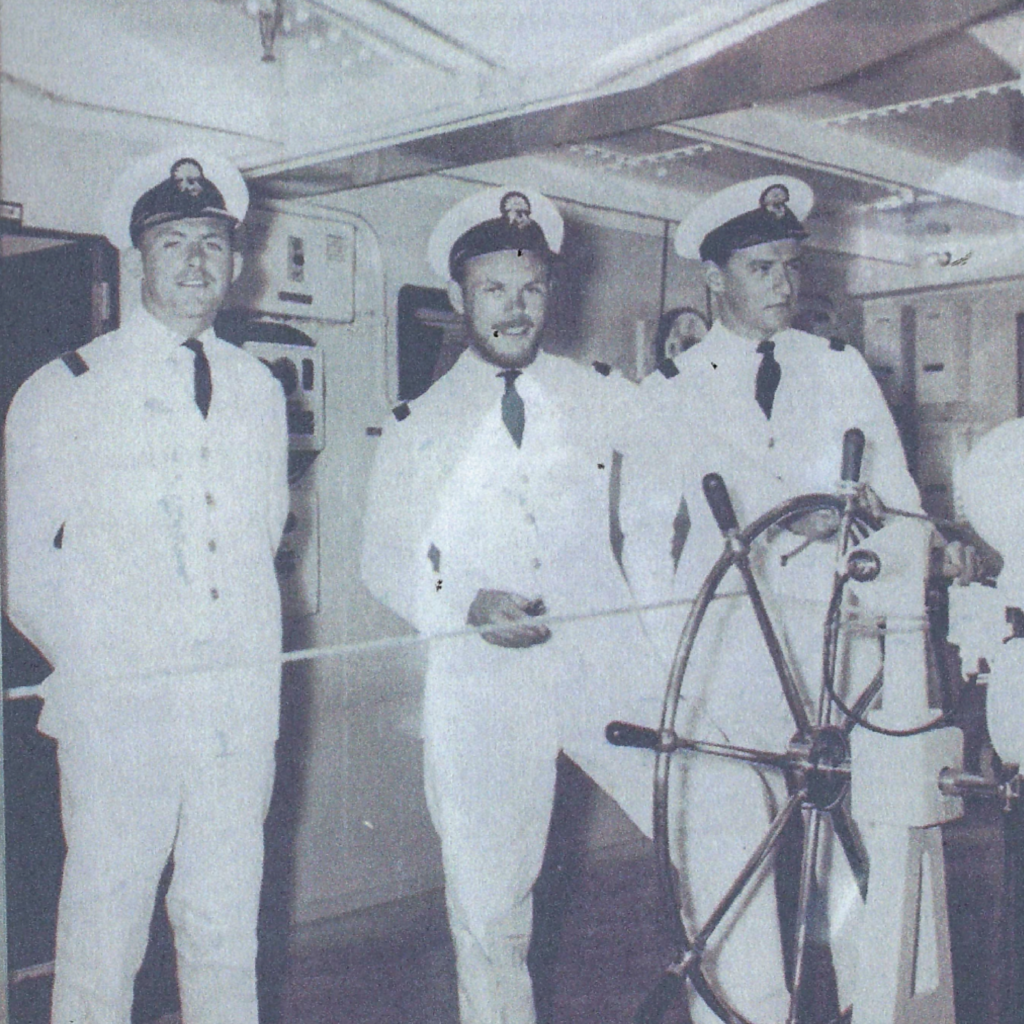
Meredith, who turns 88 next month, opened by noting that his seafaring life started at age four during World War II, when he was evacuated from England to South Africa by ship. By nine, he was helping close the portholes on ships crossing the Atlantic in convoy to avoid U-boats. At 15, he went to sea as a cadet with the Peninsular and Oriental Steam Navigation Company (P&O), rising over the following years to earn his Master Mariner’s certificate and become a ship’s captain by around age 22.
Along the way, he spent time in the Port of London training officers in cargo handling, an experience that gave him a front-row seat to how pre-containerization shipping was: cargo slung and craned aboard one unit at a time. A full dock crew could move about 9 tons of cargo an hour by hand, he recalls. A single modern container carrying 35 tons can now be lifted in about 30 seconds.
Studying Containerization and Concluding It Wouldn’t Work
Before that transformation took hold, Meredith was assigned by P&O to study whether this new “containerization” concept was viable. “Containerization is never going to work. Forget it,” he said. The trade imbalance between Asia and the West meant ships would end up hauling empty containers back and forth, and operators would now have to pay to move and store empty boxes, a problem still visible today in the stacks of empty containers piling up on the U.S. West Coast, Meredith noted.
What made it work anyway was speed: the leap from 9 tons an hour to tens of tons in 30 seconds compensated for the inefficiencies.
Hong Kong and the First Private Container Terminal
Sent to review ports worldwide on P&O’s behalf, Meredith found Hong Kong the one place where he thought the idea might actually work. In 1972, he left P&O for the Hongkong and Whampoa Dock Company, a shipbuilding and repair firm, and he persuaded management to let him build container-handling facilities on part of their shipyard after a Taiwanese line was looking to convert its ships to handle containers and Meredith offered to handle the containers himself instead.
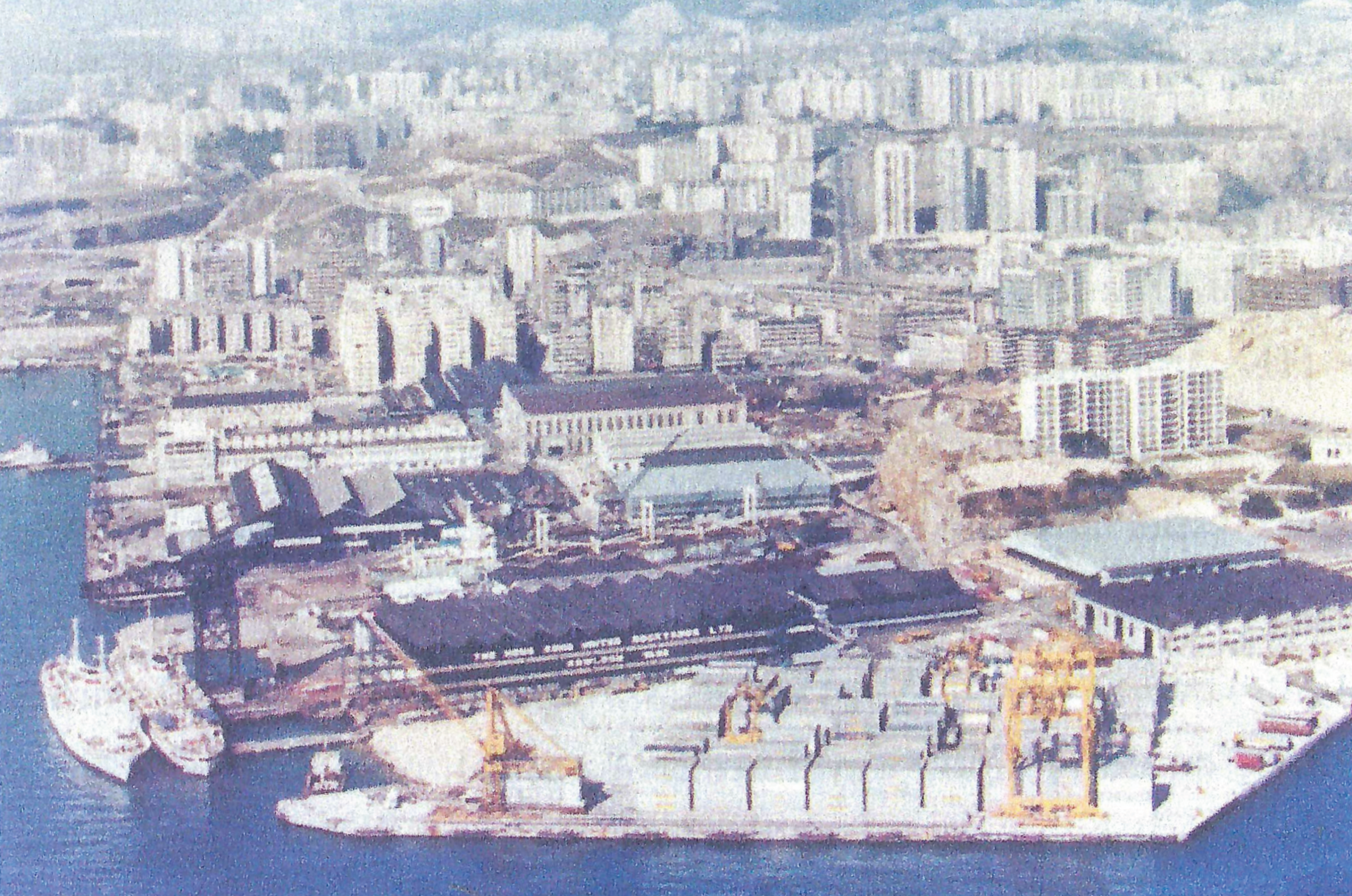
He started with a single donated crane and a converted cargo container for an office. As the operation grew, he convinced the Hong Kong government to let him reclaim land at a former yacht anchorage called Gin Drinkers Bay — leveling the surrounding hills and paying for the seabed himself, since Hong Kong had no port authority to answer to. The government, in turn, sold the newly created land to developers, part of the low-tax model that came to define the territory’s economy.
From Shenzhen Fishing Village to the World’s Busiest Port
The effect on the surrounding region was profound. In 1979, Shenzhen was a fishing village of about 30,000 people. As small manufacturers along the rivers north of Hong Kong began producing goods for export, they fed an enormous, and growing, container flow down into Hong Kong’s port, which became the busiest port in the world as a direct result of that manufacturing growth. The operation outgrew the original shipbuilding business, becoming Hongkong International Terminals and, in 1994, Hutchison Port Holdings (HPH). As HPH’s Group Managing Director for four decades, Meredith led its expansion into the world’s largest container port operator.
The model was exported. Meredith’s ports eventually expanded to the Bahamas (Freeport), the United Kingdom (Felixstowe), the Netherlands (Rotterdam), and other terminals across the Pacific and Atlantic. “We basically end up with 52 ports in 27 countries, 5 continents,” he said.
Port Security After 9/11
The conversation’s second half turned to the link between containerization and national security. After September 11, Meredith’s team reached out to the US within a day to offer help, and he became a leading industry voice on supply chain security, ultimately investing more than $200 million in layered port security systems and working with U.S. and allied governments on container security policy.
While U.S. ports lobbied Washington for funding to install fencing and X-ray equipment, Meredith’s private operation – running 52 ports with a headquarters staff of about 10 – simply acted, funding new security measures with a $10-per-container fee. His company then opened a Washington office, worked with U.S. officials, and set up X-ray screening of containers in the Bahamas before they reached U.S. shores.
Flynn closed the discussion with a broader point: security and efficiency are often framed as a trade-off, but in a well-run, monitored, automated system, the opposite tends to be true. A fully automated terminal, he argued, is one of the hardest environments in which to attempt theft or sabotage – anyone out of place stands out immediately. As he put it: “There’s an old saw for cargo theft, goods at rest are at risk.”
Recognition
Meredith was appointed CBE in 2011, holds an honorary Doctor of Laws from the University of Western Ontario, and is a Freeman of the City of London. Meredith stepped down as CEO in 2012, later served as Deputy Chairman, and retired to Panama. He closed by noting a distinction he holds as, in his words, the last living “Master and Commander,” having earned both a Commander’s honor from Queen Elizabeth II.
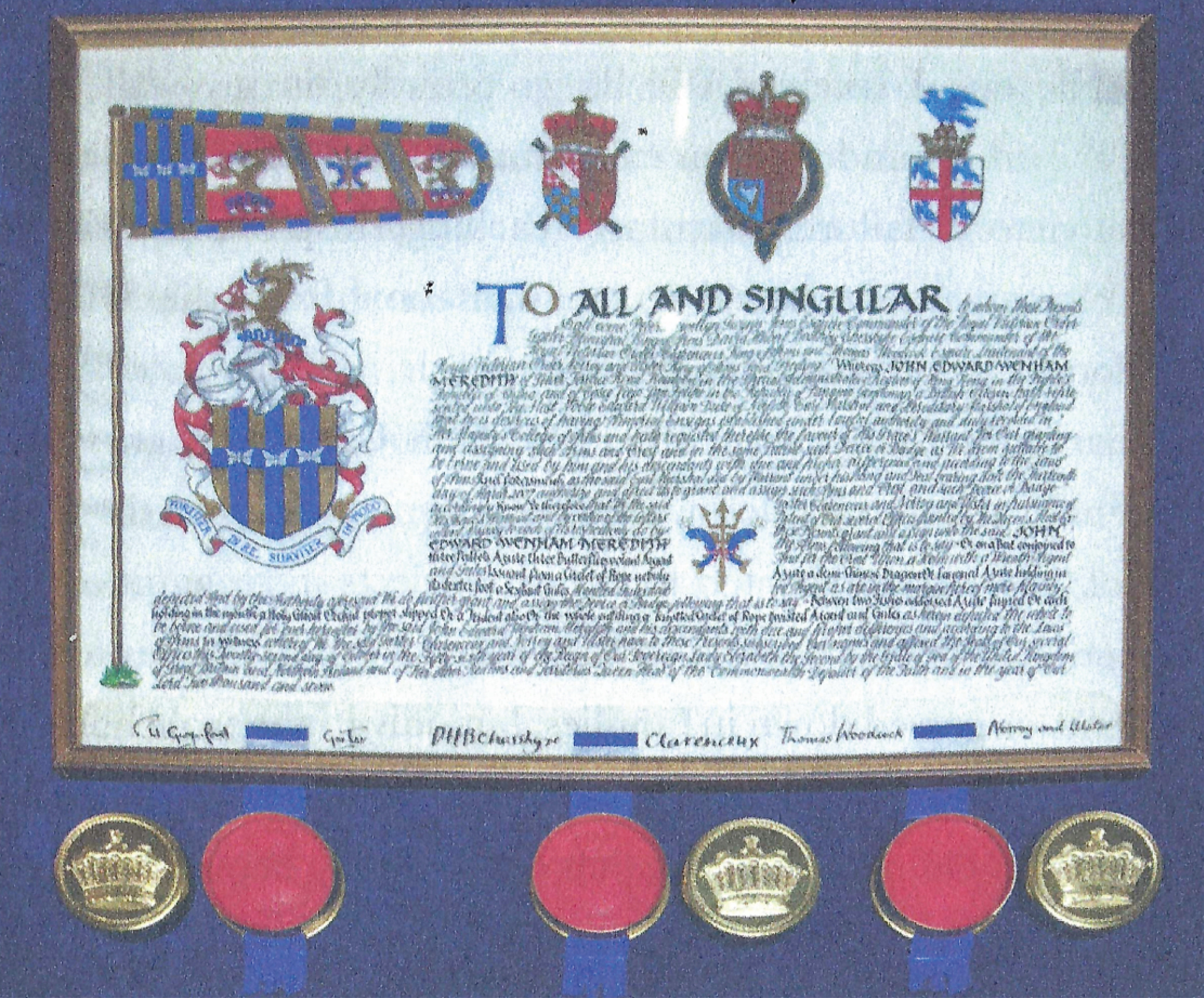
Meredith was appointed CBE in 2011, holds an honorary Doctor of Laws from the University of Western Ontario, and is a Freeman of the City of London. Meredith stepped down as CEO in 2012, later served as Deputy Chairman, and retired to Panama. He closed by noting a distinction he holds as, in his words, the last living “Master and Commander,” having earned both a Commander’s honor from Queen Elizabeth II.
Want to learn more about supply chain resilience and Captain Meredith?
- Read Captain Meredith’s book, Full Ahead Both: A Life of Ships, Spies, and Seaports.
- Watch the event recording below: